

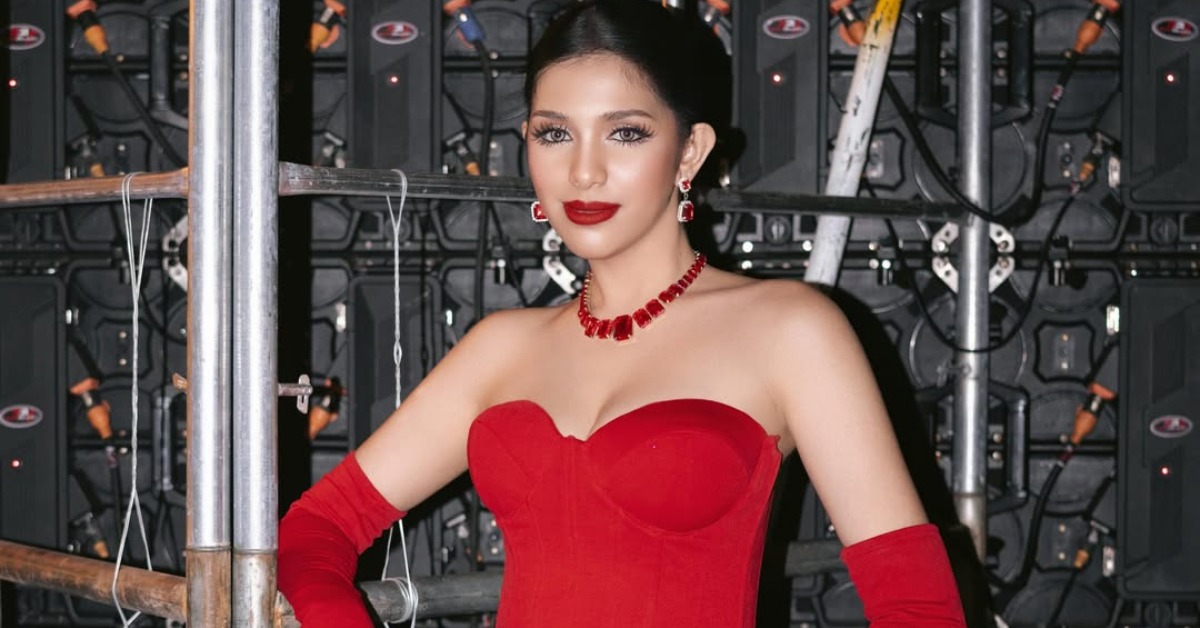
Beauty queen Joy Barcoma understands people who are both outspoken and mum on political issues while also considering the reason behind their chosen expression towards such matters.
A video clip that recently circulated on X and TikTok showed Barcoma sharing her views on political discourse and why some people, including beauty queens, celebrities and influencers, may choose not to publicly engage in political issues.
“Being political, being outspoken is a privilege,” Joy said in the clip. “‘Di lahat ng tao kayang maging political. ‘Di lahat ng tao kayang maging outspoken.”
She explained that openly expressing political views can sometimes come at a cost for certain people, to the point that it could affect important aspects of their lives.
“Being outspoken sometimes cost jobs, opportunities, friends, families, relationships. So, do not take it against people na hindi kayang maging outspoken,” Barcoma stressed.
She also cited several factors that may discourage people from speaking out on social and political issues, including economic circumstances, upbringing, and lack of political awareness.
“Una, because of circumstances. It can cost you opportunities. Pangalawa, not everybody grew up in an environment where it is okay to talk about politics or anything political. Pangatlo, hindi lahat educated to know that everything is political,” Joy pointed out.
Despite this, Barcoma stressed that people should be encouraged to become more aware and involved in social issues.
“What we should do is to guide those people and make them understand as to why they should be aware of what’s happening and as to why they should be wary and also be participative when it comes to social issues,” she added.
Following the online discussions sparked by the video, Barcoma clarified her statement through a series of posts on X, after taking notice that her remarks had been interpreted to fit a “particular narrative”.
“Speaking up is a privilege but so is silence,” she argued in her new post.
Barcoma reiterated that for many Filipinos, particularly those from working-class households, speaking up can pose serious risks.
“For many Filipinos, especially those from working-class households, speaking up can mean risking income, education, or even physical safety. At kapag buhay ang nakasalalay, ang katahimik ay hindi pahintulot, ito ay kaligtasan,” she wrote.
She also reflected on being silent as, what she described, an “innate trait” among Filipinos, shaped by families and generations “conditioned to normalize it”.
“Kaya madalas hirap pa rin ang masa maintindihan kung bakit mahalaga ang magsalita. If you grew up in a dysfunctional family that often appeases the problematic member to keep the peace, over time that fear becomes culture and that culture becomes part of our system,” she said.
However, Barcoma doubled back that her argument does not excuse individuals with “safety nets, access, influence, wealth, platforms, or power” who remain silent and hidden in their “political comfort” despite benefiting from the system.
“If the only thing you have to lose is comfort then silence is a sin,” she asserted. “If the system works in your favor, silence becomes easy and instinctive—sometimes even profitable. This convenience is political comfort. And political comfort is dangerous because it has always been one of the strongest weapons of the status quo and quietest tools of power.
Barcoma concluded her statement by addressing the unequal burden of political participation between ordinary Filipinos and the privileged.
“The price of speaking up is different for the masses & the privileged,” she said, ending with the question: “Kaya ang mahalagang tanong: BAYAN O SARILI?”
