

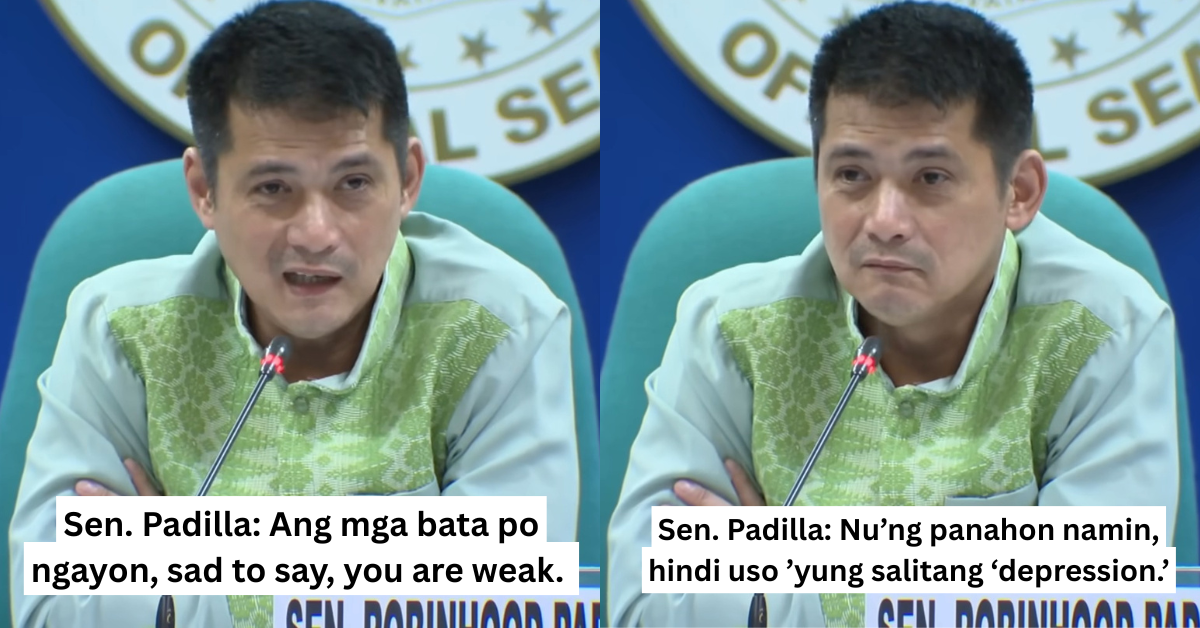
Senator Robin Padilla has apologized to those offended by his earlier remarks labeling today’s youth as “weak” amid growing concern over rising suicide cases.
In a report by One News, the 56-year-old actor-turned-politician made the apology on Friday, Feb. 13, days after he stirred controversy online over his remarks during a Senate hearing on regulating social media use among children amid rising suicide cases.
During the discussion concerning youth and mental health, Padilla contrasted the experiences of children in the 1980s and 1990s with those of today’s generation, saying young people in his time spent more time outdoors, developed social skills and built resilience.
He went on to describe today’s youth as “weak” compared with his generation.
“Ang mga bata po ngayon, sad to say, ’wag kayong magagalit sakin — naku maraming mga bata ang magagalit siguro — pero pasensiya na kayo. You are weak,” the senator said.
“Hindi kayo katulad nung panahon namin na hindi kami iyakin. Natuto kami sa kalsada. Natuto kami na ’wag umupo, umiyak.”
He also remarked that depression was rarely discussed during his youth, even admitting he was unfamiliar with the condition at the time.
“Nu’ng panahon namin, hindi uso ’yung salitang ‘depression.’ ’Di ko nga alam ’yun eh, kung ano ’yung depression. Ngayon, batang maliit, sasabihin, ‘I’m depressed,'” he said.
Later that day, Padilla took to social media to defend his remarks after facing criticism online.
He clarified that calling today’s youth “weak,” in his view, was not meant as an insult but as an “observation” he said was supported by studies examining the effects of excessive social media use.
“Sa pagdinig tungkol sa Senate Bill Nos. 40, 185, 595, 601, at 1735 o Children’s Safety in Social Media Act, sinabi ko na ‘weak’ ang kabataan ngayon. Hindi ito pangungutya,” he explained in a Facebook post.
“Ito ay obserbasyon na sinusuportahan ng mga pag-aaral na nag-uugnay sa labis na paggamit ng social media sa anxiety, depresyon, kawalan ng tulog, at mababang self-esteem.”
Padilla concluded his post by reiterating his concern over social media addiction among children and advocated for regulation similar to policies adopted in other countries.
His remarks drew responses from mental health advocates and netizens, including psychologist Riyan Portuguez, popularly known online as “Your Millennial Psychologist,” who addressed Padilla’s comments about depression.
“Paumanhin, Senator Robin Padilla. Noong panahon po kasi ninyo maraming mga tao partikular na ang kabataan ang natatakot na magsabi dahil sa katulad po ninyo na kaysa maunawaan eh hinuhusgahan kaagad na ‘weak’ o mahina kapag may pinagdadaanan,” Portuguez argued on Facebook, writing under a post quoting Padilla’s statement.
“Maraming katulad po ninyo noon ang nagtatago sa dilim para sarilinin lang ang problema at magkunwaring ‘okay lang’. Paano mo makikita eh nagtatago nga? Sana ho hindi mangyari sa pamilya ninyo para lang maunawaan kung anong ibig sabihin ng salitang ‘depression’,” he added.
TV presenter Kim Atienza also reacted to remarks by Padilla, where he mentioned his late daughter, Emmanuelle “Emman” Atienza, who died at 19 after battling mental illness.
“[…] Senator Robin Padilla said depression wasn’t something they talked about in his generation, going as far as to describe today’s youth as ‘weak’. The internet didn’t take long to respond—it’s 2026, after all,” wrote Atienza on Facebook.
“While views may differ on how depression is understood across generations, one thing is clear: support should always be available,” the celebrity father said. “That’s why we’ve put together a list of 24/7 crisis hotlines, because whether or not the word was used before, the need for help is real for many today.”
Padilla later replied to Atienza with an apology, saying “Paumanhin po,” as quoted by One News, but stood by his call for strict measures, including a proposed total social media ban for children aged 16 and below.
The senator argued that such measures are needed to address the youth mental health crisis. He also regarded the controversy as a way that helped “force a national conversation” on how the digital age affects children.
